



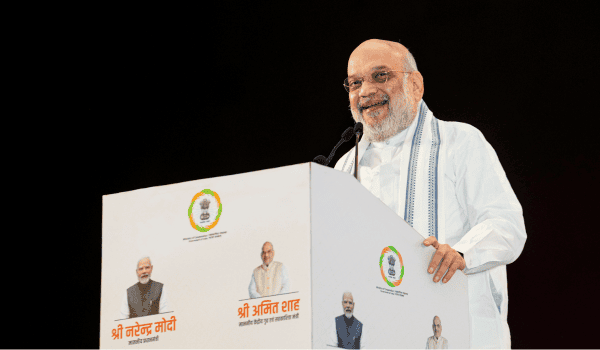
New Delhi: In a significant move that could expand the footprint of India’s cooperative movement into the financial services sector, Union Home and Cooperation Minister Amit Shah has announced that a new cooperative life insurance company will be established. The announcement was made during the fifth Foundation Day celebrations of the Ministry of Cooperation in New Delhi.
The proposed insurer is expected to follow the broader philosophy behind Bharat Taxi, India’s cooperative-led ride-hailing platform, where service providers become stakeholders and beneficiaries of the enterprise rather than merely customers or workers. Shah also announced that Bharat Taxi would be expanded to 500 cities over the next two years, signalling the government’s intent to replicate cooperative models in new sectors.
A New Frontier for Cooperatives
While detailed operational plans for the proposed insurance company have not yet been disclosed, the announcement aligns closely with the vision outlined in the National Cooperative Policy, which identified insurance among the emerging sectors where cooperatives can play a larger role.
India’s cooperative movement already has a vast grassroots network, comprising over 8.5 lakh cooperative societies and more than 30 crore members. Leveraging this network could potentially create one of the largest member-based insurance distribution ecosystems in the country.
The move is particularly significant because insurance remains underpenetrated in many rural and semi-urban regions. Cooperatives, with their established relationships among farmers, workers, self-help groups and local communities, may be well positioned to improve access to life insurance products.
What Could a Cooperative Insurance Model Look Like?
Although the government has not released specifics, a cooperative life insurance company would likely operate on principles distinct from conventional shareholder-owned insurers.
Under a cooperative structure, policyholders and member institutions could potentially become stakeholders in the organisation. Surpluses generated by the company may be reinvested for member benefit, distributed through patronage mechanisms, or used to enhance services and coverage.
The model could also create opportunities for existing cooperatives—including dairy, credit, housing, labour, sugar, fisheries and PACS institutions—to act as distribution and service partners, thereby strengthening the cooperative ecosystem.
Lessons from Bharat Taxi
The announcement draws attention to the government’s recent experiment with Bharat Taxi, India’s first cooperative-based ride-hailing platform registered under the Multi-State Cooperative Societies framework. The platform was launched with the objective of ensuring that drivers retain a larger share of earnings and participate in ownership of the enterprise.
By referencing Bharat Taxi, the Ministry of Cooperation appears to be signalling a broader strategy of creating cooperative alternatives in sectors traditionally dominated by private corporations. The cooperative insurance company could become another example of this approach if successfully implemented.
Opportunities and Challenges Ahead
The proposed initiative offers several opportunities. It could improve insurance penetration among cooperative members, create a trusted channel for financial inclusion, and diversify the business activities of cooperatives beyond their traditional sectors.
However, insurance is among the most heavily regulated segments of the financial services industry. The proposed company will need to secure regulatory approvals, build actuarial and risk-management capabilities, establish adequate capital, and compete with established public and private insurers.
Its success will depend not only on the strength of the cooperative network but also on professional management, technology adoption, product innovation and customer service standards.
Why This Matters for the Cooperative Sector
For India’s cooperative movement, the announcement represents more than the launch of another business entity. It reflects an effort to position cooperatives as participants in emerging service sectors and not merely as agricultural or credit institutions.
If executed effectively, the cooperative life insurance company could become a landmark initiative—similar to how cooperative models transformed India’s dairy sector—by extending the principles of member ownership and collective benefit into the insurance domain.
More details regarding the structure, ownership pattern, regulatory framework and timeline for the proposed company are expected in the coming months.
