



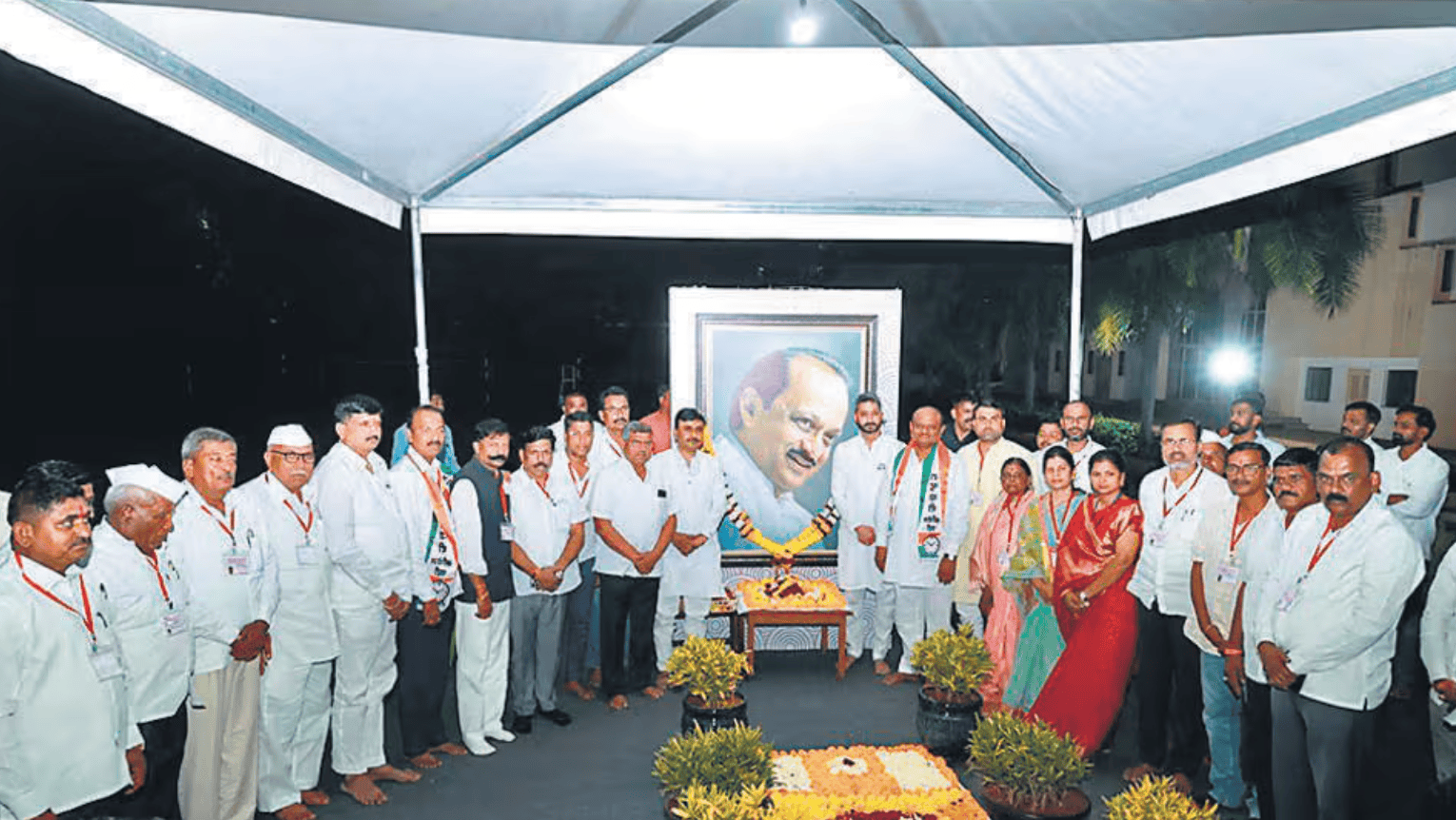
A decisive electoral victory at Maharashtra’s Someshwar Cooperative Sugar Factory has strengthened Deputy Chief Minister Sunetra Pawar’s position in the state’s cooperative sector.
The panel backed by her Nationalist Congress Party (NCP) faction won all 21 seats in the factory’s board election, defeating a rival group led by incumbent chairman Purushottam Jagtap and a separate panel associated with the Sharad Pawar-led NCP faction.
Rebellion fails to dent the ruling panel’s lead
The election witnessed a three-way contest involving the panel backed by Sunetra Pawar, the Someshwar Shetkari Vikas Panel led by Yugendra Pawar and the rebel group headed by Jagtap, who contested independently of the NCP faction he had previously been associated with.
The scale of the victory was evident in the contest for the chairman’s own electoral constituency. NCP-backed candidate Vikram Bhosale defeated Jagtap by 6,490 votes. Bhosale secured 13,854 votes against Jagtap’s 7,364, according to Loksatta. The outcome ended Jagtap’s challenge to the panel backed by Sunetra Pawar’s camp.
The election recorded a voter turnout of 84.25%, reflecting substantial participation by the factory’s electorate. A total of 83 candidates contested the 21 seats, including candidates from three panels and independents. The contest also brought rival NCP factions into direct competition for influence over the cooperative.
Campaign coordination for Sunetra Pawar’s panel was handled by her son Jay Pawar, while Yugendra Pawar led the rival panel associated with Sharad Pawar. Jagtap’s rebellion, which also received support from political opponents of the ruling NCP faction, failed to translate into electoral gains.
Significance Sunetra Pawar
The result carries added political significance as Purushottam Jagtap, who had shared a 34-year association with Ajit Pawar, broke ranks with the Nationalist Congress Party (NCP) to field a separate panel. The election was the first major cooperative-sector contest since Ajit Pawar’s demise. It was widely viewed as a test of Sunetra Pawar’s ability to retain her family’s influence over Baramati’s cooperative institutions.
Reflecting on Ajit Pawar’s long association with the factory, Sunetra Pawar highlighted his commitment to the cooperative mill, his vision for the welfare of farmer-members and his contribution to Maharashtra’s cooperative movement. She said carrying forward his approach and fulfilling his vision for farmers would be a fitting tribute to his legacy.
