



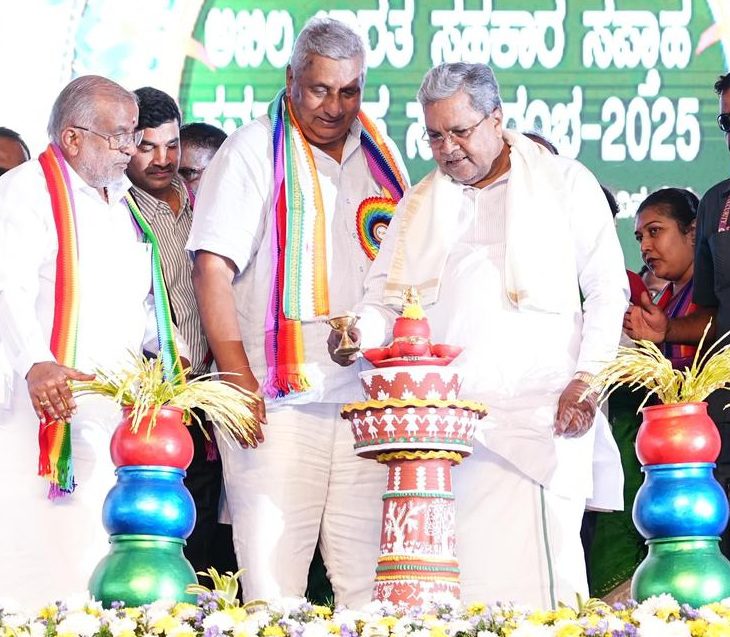
Chief Minister Siddaramaiah announced that students with degrees and diplomas in cooperative studies will be accorded priority in recruitment to the Cooperation Department.
He was speaking at the valedictory function of the 72nd All India Cooperative Week Celebrations in Chamarajanagar on Thursday, November 20.
The Chief Minister also said that lessons on the cooperative movement and their importance or impact will be introduced as part of school and college curricula.
Referring to the cooperative movement in the State, Mr. Siddaramaiah said that cooperative societies were registering growth in many sectors including agriculture, dairy, industry, and banking, and described it as a healthy development. With respect to milk cooperative societies, Karnataka was second only to Gujarat, he added.
The Chief Minister said that he supported autonomy and self-reliance of milk producers’ cooperative societies and currently, one crore litres of milk were being produced per day. The government was providing a subsidy of ₹5 per litre — amounting to ₹5 crore per day — to dairy farmers. ‘’Even though the price of milk has been increased twice in recent times, clear instructions have been issued that the additional money must go to the milk producers,’’ Mr. Siddaramaiah added.
He attributed the growth and success of the cooperative movement in the country to the foresight of India’s first Prime Minister Jawaharlal Nehru. The Chief Minister said that Nehru envisaged one school, one gram panchayat, and one cooperative society in every village for the economic development of rural areas. ‘’Owing to his foresight, the cooperative movement in the country became strong,’’ he pointed out.
He said the government has been framing and implementing programmes for the welfare of all and remarked that people of all castes and religions in Chamarajanagar district have supported him. ‘’During my first tenure as Chief Minister, many Bhagya schemes were introduced and benefited the poor across all castes. In my second tenure, the guarantee schemes were introduced, which are financially and economically empowering the poor,’’ he said.
