



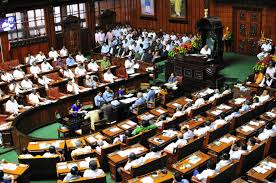
The Karnataka Legislative Assembly has passed the Co-operative Societies (Amendment) Bill, 2025, introducing caste and gender-based reservation for the top positions in cooperative societies.
Under the new law, the posts of chairperson and vice-chairperson will be reserved on a rotational basis among Scheduled Castes (SC), Scheduled Tribes (ST), Other Backward Classes (OBCs), and women.
Key Provisions of the Bill
Rotational Reservation: Chairperson and vice-chairperson positions to rotate annually among SCs, STs, OBCs, and women.
Board Nominations: Nominated members of the board will also come under reservation. At least one nominee must be from SC/ST and one must be a woman. These nominated members will have voting rights and be eligible to contest for the board, chairman, and vice-chairman posts.
Member Accountability: The bill makes it mandatory for Members of primary cooperative societies to declare their assets and liabilities annually and regularly attend general body meetings. Failure to do so may lead to disqualification.
State Government’s Position
Introducing the bill, Law Minister H.K. Patil said the reforms were vital for strengthening cooperatives.
“The reforms will revolutionize the cooperative sector by ensuring representation of marginalized communities and delivering on social justice,” he stated.
Concerns Raised
The bill drew criticism from some legislators. G.T. Devegowda and Laxman Savadi objected to several provisions, including:
- The rotational reservation of leadership posts,
- Granting voting rights to nominated members, and
- The requirement for members to disclose their assets.
They expressed concern that such measures could affect the autonomy of cooperative societies.
Critics further caution that extending reservations into leadership role may have unintended consequences. They argue that cooperative societies were originally designed to operate on the principles of merit, trust, and efficiency, with members electing leaders based on capability and confidence.
Detractors believe reserving positions such as chairperson and vice-chairperson could weaken the autonomy of cooperatives and open the door to political interference, where leadership is determined more by caste and quota considerations than competence. This, they warn, could ultimately affect decision-making and the smooth functioning of cooperative institutions.
