



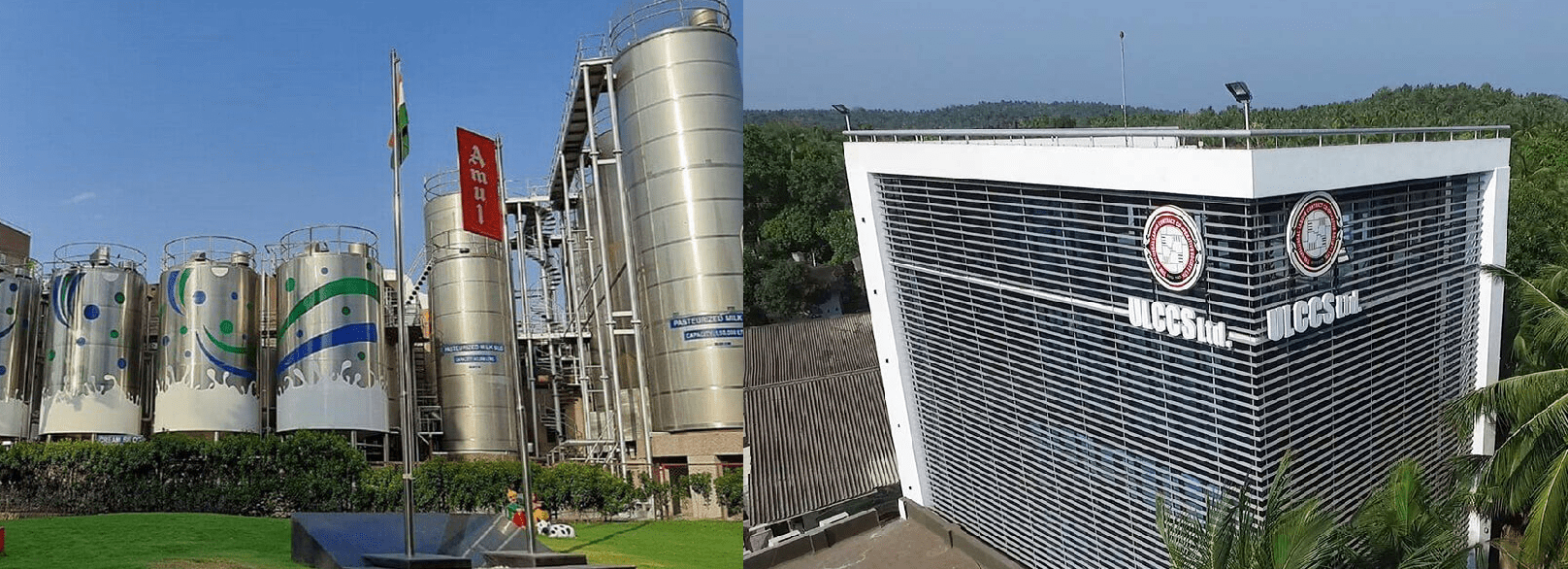
In a major global recognition for India’s cooperative movement, the Uralungal Labour Contract Cooperative Society (ULCCS) in Kerala and the Dr. Verghese Kurien Museum of Amul in Gujarat have been featured on the International Cooperative Alliance (ICA)’s first-ever Global Cooperative Cultural Heritage Map. The announcement was made on 13 November 2025 at a high-level ceremony held at the Itamaraty Palace in Brasília.
The newly launched heritage platform documents 31 founding cultural heritage sites across 25 countries, aimed at safeguarding the historical and social contributions of cooperatives worldwide. ULCCS and Amul represent India among only seven Asian entries, highlighting the country’s longstanding cooperative legacy.
A Century of Collective Action: ULCCS in Global Spotlight
Established in 1925 by social reformers in Kerala’s Malabar region, ULCCS has evolved from a rural workers’ collective into one of the world’s most respected labour cooperatives. Over the decades, it has adhered to principles of shared ownership, democratic decision-making, and equitable growth. Today, ULCCS provides direct employment to over 18,000 workers and reports an annual turnover exceeding ₹2,334 crore.
The society has consistently gained international attention. The World Cooperative Monitor ranked ULCCS as the world’s second-largest cooperative under the Industry and Utilities category for three consecutive years over the past decade—an exceptional achievement for a cooperative rooted in labour empowerment.
ULCCS has expanded beyond infrastructure development into multiple sectors, including UL Cyberpark (the world’s only IT park owned by labourers), UL Technology Solutions, Sargaalaya Arts & Crafts Village, UL Education, UL Agriculture, UL Housing, and MatterLab, South India’s largest material testing facility. It also manages the Indian Institute of Infrastructure and Construction under the Kerala government’s Labour Department. These initiatives have collectively strengthened its position as a model of worker-led development.
Introducing ULCCS on the global platform, ICA noted that cooperative heritage sites serve as “living classrooms of solidarity,” reflecting community-led progress and cultural identity. ICA President Ariel Guarco said the map celebrates cooperation as “humanity’s shared heritage.”
Amul’s Legacy and the Kurien Museum Highlighted
Alongside ULCCS, the Dr. Verghese Kurien Museum, dedicated to the architect of India’s White Revolution, represents Amul on the global map. The museum showcases the evolution of dairy cooperatives in India, the governance model developed by Kurien, and the impact of the cooperative dairy movement on rural livelihoods. Its inclusion underscores the enduring cultural and socio-economic influence of the Amul cooperative system. Recently AMUL was crowned World’s No. 1 Cooperative in ICA Global Rankings.
India’s Integral Role in Building the Platform
The development of the cooperative heritage map involved close collaboration with ICA member institutions, including the Organisation of Brazilian Cooperatives (OCB) and India’s National Cooperative Development Corporation (NCDC). NCDC Managing Director Pankaj Bansal (IAS) said India’s participation reaffirms its strong cooperative foundations, adding that NCDC supported the technical and documentation aspects of the global platform.
OCB President Márcio Lopes de Freitas described the recognised sites as “milestones of global unity” that reflect how cooperation shapes fair and inclusive societies.
A Growing Global Initiative
The launch marks the beginning of a global nomination cycle for additional cooperative heritage sites and living traditions. Approved sites will receive the ICA–CCH Label and be featured on the worldwide platform. ICA has also announced the 2026 Intangible Cooperative Heritage List, which will document oral traditions, rituals, and practices representing cooperative culture beyond physical structures.
For India, the inclusion of ULCCS and the Amul legacy reinforces the nation’s pivotal contribution to the global cooperative movement—where collective ownership, worker-led progress, and community-driven development continue to inspire sustainable economic models worldwide. Read more about ICA Launches Global Cooperative Cultural Heritage Platform and World Map.
