



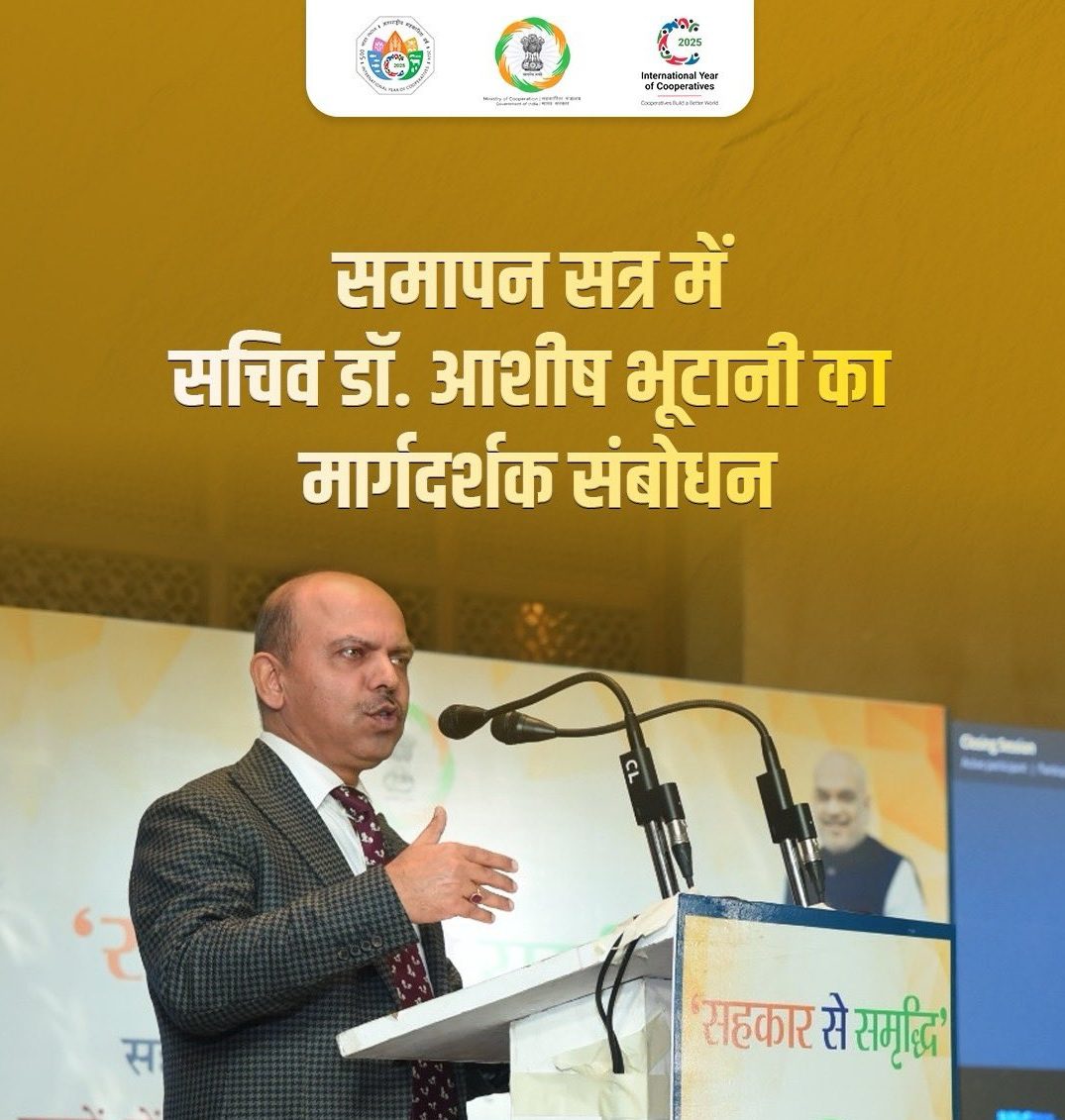
A two-day national-level workshop and review meeting on strengthening the cooperative sector was held in Udaipur, Rajasthan, on 8–9 January 2026. The event focused on assessing ongoing cooperative reforms and advancing the vision of “Sahkar se Samriddhi” to promote inclusive growth and rural prosperity.
Organised by the Ministry of Cooperation, Government of India, the workshop brought together senior officials from States and Union Territories, including Secretaries and Registrars of Cooperative Societies, along with representatives of key cooperative institutions. The workshop was inaugurated by Dr. Ashish Kumar Bhutani, Secretary, Ministry of Cooperation, in the presence of senior officers and dignitaries. Smt. Anandhi, Secretary (Cooperation), Government of Rajasthan, welcomed participants to the state.
Focus on strengthening Centre–State coordination
In his keynote address, the Secretary, Ministry of Cooperation, underlined that the workshop was aimed at strengthening coordination between the Centre and States/UTs, encouraging exchange of ideas and supporting innovative approaches to revitalise the cooperative sector. He stressed the need to bring cooperatives into the mainstream by reshaping public perception and highlighting successful models through traditional and digital media.
Referring to Banaskantha Dairy as an example, he noted how an area earlier considered drought-prone was able to build an integrated value chain resulting in very high milk production, demonstrating the potential of well-managed cooperatives. He also highlighted key reform priorities including improving election processes in cooperative bodies, addressing dual regulation of cooperative banks, strengthening consensus-based decision-making and ensuring greater field-level engagement.
The Ministry of Cooperation’s ongoing consultations with regulatory authorities to simplify procedures for rural and urban cooperative banks were also discussed.
Reforms, digital initiatives and sectoral expansion reviewed
The workshop reviewed progress on major initiatives of the Ministry of Cooperation such as:
- Computerisation of Primary Agricultural Credit Societies (PACS), Agricultural and Rural Development Banks (ARDBs) and Registrar of Cooperative Societies (RCS) offices
- Implementation of PACS-based multipurpose activities including dairy and fishery cooperatives
- Expansion of services by PACS, including Common Service Centres, PM Kisan Samriddhi Kendras and Jan Aushadhi Kendras
Discussions also covered the world’s largest grain storage initiative in the cooperative sector and reform measures in cooperative banking. Digital initiatives such as National Cooperative Organic Limited, National Cooperative Exports Limited and Bharatiya Beej Sahkari Samiti Limited were highlighted, along with efforts to promote “White Revolution 2.0”.
Strengthening cooperative database and governance systems
A dedicated session focused on the strengthening of the National Cooperative Database and reforms in Multi-State Cooperative Societies. States shared experiences relating to:
- API integration and digital reporting
- updating annual financial data for GVA estimation
- onboarding cooperatives on GeM
- expediting liquidation processes
- improving governance and e-commerce platforms
Capacity building through institutions such as LBSNAA, NCCT, VAMNICOM and cooperative universities was discussed, with special attention to women, youth and marginalised groups.
PACS empowerment and future strategies
On the second day, a special session titled “Sahkar se Samriddhi – PACS Ahead” focused on empowering Primary Agricultural Credit Societies. Presentations included:
- Cashless PACS and MIS systems (Tamil Nadu)
- Startup ecosystem for cooperatives (Andhra Pradesh)
- District business plans (Jammu & Kashmir)
- Model cooperative villages (NABARD)
- Membership drive initiatives (Uttar Pradesh)
- Storage and supply-chain integration with FCI (NABCONS)
Discussions emphasised making PACS financially sustainable, technologically enabled and future-ready. Special sessions also highlighted cooperative development in the North-Eastern Region and technology-enabled fisheries and dairy cooperatives.
Concluding session
The concluding session, chaired by Shri Pankaj Kumar Bansal, Additional Secretary, Ministry of Cooperation, focused on integrating Self-Help Groups and Farmer Producer Organisations with PACS and strengthening outreach under NCDC initiatives.
In his closing address, Dr. Ashish Kumar Bhutani reiterated that PACS form the backbone of the cooperative structure and stressed the need for complete computerisation to enhance rural financial inclusion. He mentioned that the Food Corporation of India has provided rental guarantees to support grain storage infrastructure with targets of 5 lakh tonnes by September 2026 and 50 lakh tonnes by September 2027. The workshop concluded with appreciation extended to the Government of Rajasthan for hosting the event.
