



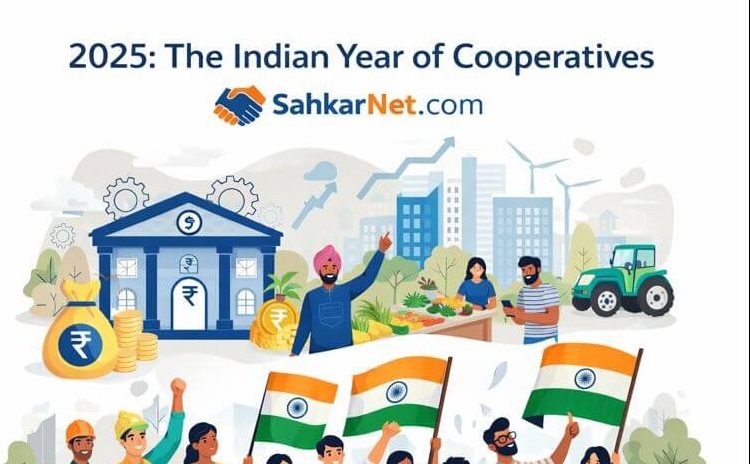
New Delhi, January 5, 2026 — The Indian cooperative sector witnessed a transformative year in 2025, marked by renewed momentum, policy reforms, grassroots expansion and global engagement. Anchored by the Ministry of Cooperation under Union Home and Cooperation Minister Amit Shah, the movement gained strategic direction through enhanced coordination with key institutions, state governments and the wider domestic and international cooperative movement. Central to these developments was the key role of the Ministry of Cooperation to celebrate the United Nations’ International Year of Cooperatives (IYC) 2025.
Ministry of Cooperation: From Foundational Reform to Strategic Leadership
Since its inception in 2021, the Ministry of Cooperation has spearheaded efforts to modernize and mainstream India’s cooperative ecosystem. In 2025, the ministry marked a decisive shift from policy formulation to implementation, expanding outreach, supporting institutional capacity and deepening stakeholder partnerships.
Under Minister Amit Shah’s leadership, the ministry rolled out the National Cooperative Policy 2025, outlining a 20-year vision to strengthen cooperative governance, expand the network of Primary Agricultural Credit Societies (PACS) and enable rural economic transformation.
Directing attention to institutional modernization, the ministry convened nationwide forums, including ‘Manthan Baithaks’ to align state cooperation departments with central objectives and encourage data-driven reforms.
International Year of Cooperatives 2025: A Catalyst for Growth
The United Nations’ declaration of 2025 as the International Year of Cooperatives positioned India at the forefront of global cooperative advocacy. Officially launched at the International Cooperative Alliance (ICA) Global Cooperative Conference in New Delhi, the event drew delegates from over 100 countries and highlighted cooperatives’ role in inclusive development and sustainability.
In his keynote address, Prime Minister Narendra Modi underscored cooperatives as “a way of life” for India and a model for equitable economic progress. “For the whole world, cooperatives are a business model, but … cooperation is the basis of our culture,” he said at the event.
With the yearlong events planned by the cooperative organizations and state governments to celebrate the IYC2025, the Ministry of Cooperation aimed to help cooperative organizations increase transparency, improve operational efficiency, enhance accountability and strengthen cooperative governance.
IYC-2025 facilitated nationwide visibility campaigns, extensive outreach through digital platforms and partnerships with organisations such as Amul and NCDFI, which carried the year’s logo on products and organised local events.
Grassroots Expansion and Institutional Strengthening
The cooperative movement saw significant growth at the grassroots in 2025. According to official data, the formation of over 30,000 new PACS, dairy and fisheries cooperatives, alongside capacity-building programs for nearly 16,000 existing societies, brought fresh energy to rural enterprise and livelihood support.
Collaborating closely with apex bodies such as the National Dairy Development Board (NDDB) and the National Cooperative Dairy Federation of India (NCDFI), the ministry promoted digital service delivery, enhanced credit access and facilitated integrated market linkages for producers and farmers.
Cooperative banking also saw strategic support. State-level initiatives such as the establishment of new District Central Cooperative Banks (DCCBs) in Gujarat aimed at improving financial inclusion and strengthening local banking infrastructure.
State Governments and Regional Leadership
Across states, cooperative development received renewed focus. Workshops and summits emphasising “Sahkar Se Samriddhi” brought together cooperative leaders and policymakers to advance rural economic objectives.
The North Eastern states emerged as active participants in cooperative outreach, integrating traditional community-based organisations with formal cooperative frameworks, and enhancing local production value chains.
State governments such as Uttar Pradesh and Uttarakhand used the IYC platform to launch initiatives expanding credit access, digitising societies and promoting women’s participation, reinforcing the sector’s socio-economic impact.
Sector Milestones and Global Recognition
Several developments marked cooperative achievements in 2025:
- AMUL ranked the world’s number one cooperative, with IFFCO following closely, reflecting India’s global dairy leadership.
- Revival programs targeted defunct cooperative units, including announcements to revive sugar mills, demonstrating continued sectoral revitalisation efforts.
- High-level summits underscored digital transformation and sustainable agriculture through cooperative collaboration.
Throughout the year, Amit Shah reiterated the cooperative movement’s role in job creation, rural development and equitable growth, stating that wider engagement and structural support would ensure cooperative societies are engines of local empowerment.
Overall, the year 2025 can easily be counted as the Indian Year of Cooperatives.
