



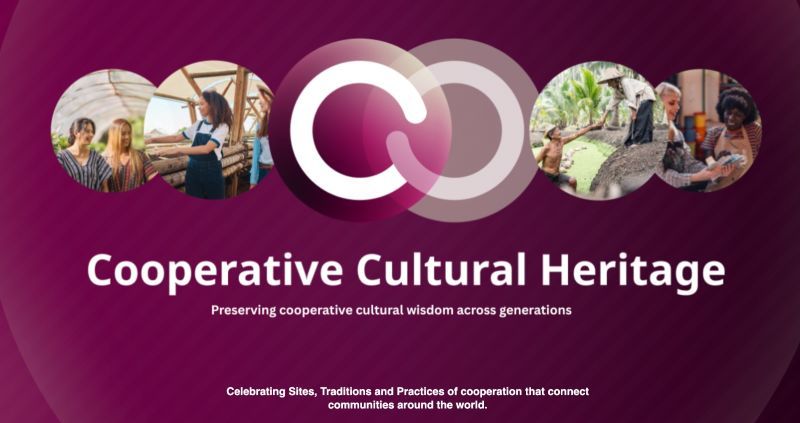
The International Cooperative Alliance (ICA) has launched the Cooperative Cultural Heritage Platform and the first World Map of Cooperative Heritage Sites, highlighting how the global cooperative movement has shaped culture, education, and livelihoods over generations. The initiative was unveiled at the Itamaraty Palace in Brasília, the headquarters of Brazil’s Ministry of Foreign Affairs.
The new platform aims to document and preserve the cultural legacy of cooperatives worldwide. “Cooperatives are not only enterprises; they are bearers of culture, history, and identity,” said Ariel Guarco, President of the ICA, emphasizing the sector’s role in community building and social solidarity.
31 Heritage Sites Featured in the 2025 Edition
The inaugural 2025 edition features 31 heritage sites across 25 countries, representing key milestones in the cooperative movement. Notable sites include:
- Rochdale (UK) – birthplace of the modern cooperative movement
- Monumento ao Cooperativismo in Nova Petrópolis (Brazil)
- Amul Dairy Cooperative and Verghese Kurien Museum, India
- ULCCS Headquarters, Vadakara, Kerala, India
- Federation of Southern Cooperatives, USA
- Moshi Co-operative University, Tanzania
- ILO Cooperative, Social and Solidarity Economy Unit, Switzerland
The map was developed in partnership with the Organisation of Brazilian Cooperatives (OCB) and India’s National Cooperative Development Corporation (NCDC), with support from the ICA Global Office.
“These sites are living classrooms of solidarity,” said Márcio Lopes de Freitas, President of OCB. “They show that cooperation is both history and horizon—a cultural force that continues to build fairer societies.”
Pankaj Bansal (IAS), Managing Director of NCDC, noted that India contributed to the technical development of the platform, helping document the cooperative movement’s global legacy. The launch ceremony saw the presence of several dignitaries, including Vanderley Tiger, Secretary of Family Farming and Agroecology; Ambassador Maria Laura de Rocha, Acting Minister of Foreign Affairs; and Rodrigo Lima, Special Advisor to the Director’s Office at UNESCO.
