



Ahmedabad: The Gujarat government’s in-principle approval for nine new District Central Cooperative Banks (DCCBs) is set to address long-standing gaps in district-level cooperative credit coverage, particularly in newly formed, tribal-dominated, and coastal districts that currently depend on neighbouring district banks.
The proposed DCCBs will come up in Dahod, Aravalli, Tapi, Chhota Udepur, Devbhumi Dwarka, Porbandar, Anand, Dang, and Navsari, districts that were either carved out in recent years or have witnessed rising demand for decentralised cooperative banking services.
Experts are of the view that the move is aimed at bringing cooperative credit administration closer to primary agricultural credit societies (PACS) and local farmer members, improving turnaround time for loans, refinancing, and recovery mechanisms.
State government spokesperson and minister Jitu Vaghani, while informing about the cabinet decision, told the reporters that the Chief Minister has given in-principle approval for the formation of nine new District Central Cooperative Banks. Nine new districts in Gujarat had been carved out from existing big districts over the last many years. He further said that now the state government has decided to divide DCCBs of those districts from which nine new districts were formed, and assign the new DCCBs to newly-formed districts.
The minister added that the Prime Minister Narendra Modi has decided to expand the scope of rural cooperative banks in all districts of the country and to achieve this objective, a special initiative has been undertaken by the Ministry of Cooperation under the leadership of Union Minister of Cooperation Amitbhai Shah.
According to the minister, the proposal follows an initiative led by the Ministry of Cooperation, under which the National Bank for Agriculture and Rural Development (NABARD) identified districts where separate DCCBs could improve operational efficiency and financial inclusion. Gujarat was among the states that submitted proposals in this regard.
By establishing district-specific cooperative banks, the government expects to enhance credit flow to agriculture, allied activities, self-help groups, and rural micro-enterprises, while also strengthening governance and supervision at the district level.
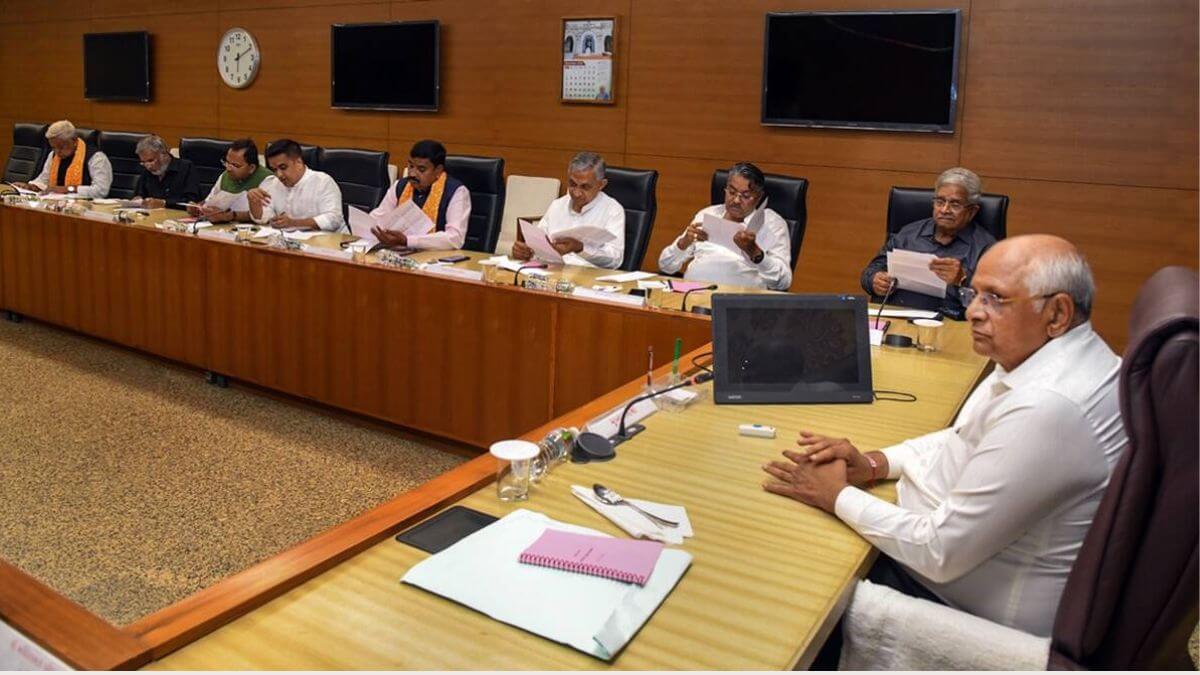
The in-principle clearance by the Cabinet, chaired by Chief Minister Bhupendra Patel, will now be followed by the preparation of a detailed proposal to be submitted to the Reserve Bank of India (RBI) through NABARD for regulatory approval.
Sector experts note that once operational, the new DCCBs could play a critical role in implementing national cooperative reforms, including PACS computerisation, multi-service delivery, and convergence with central schemes, in line with the objectives of the Ministry of Cooperation. Read here about launch of ‘Sahakar Sarathi’, a major digital transformation initiative for rural cooperative banks.
