



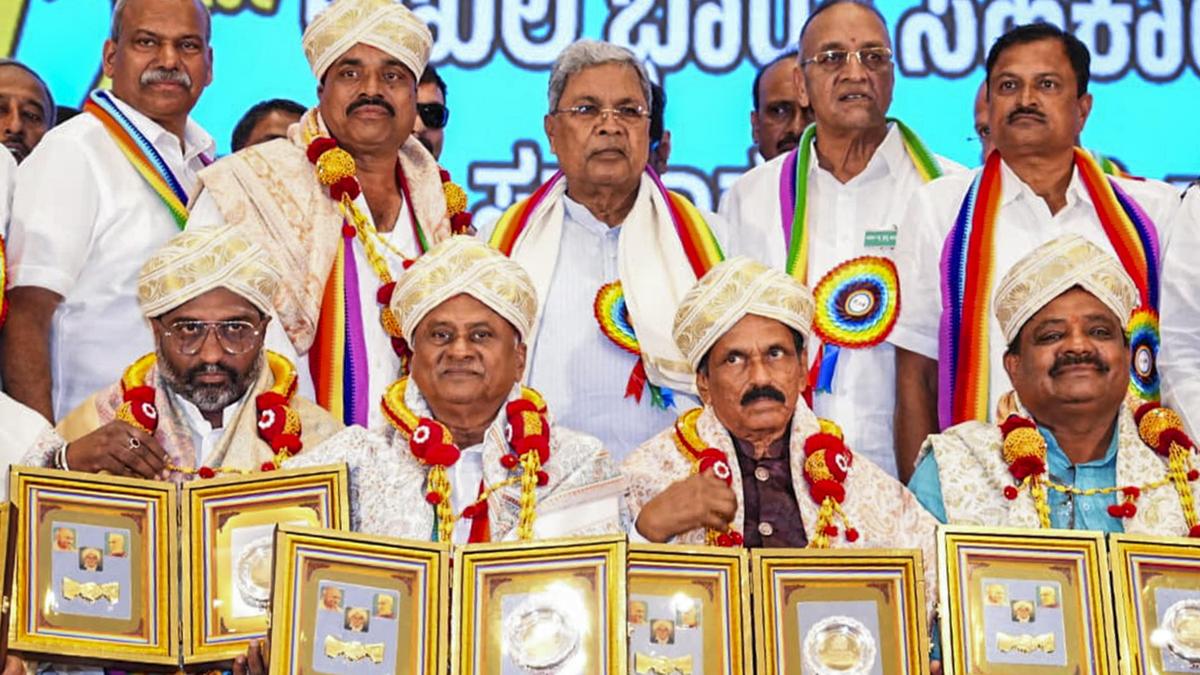
Karnataka Chief Minister Siddaramaiah says cooperatives are the backbone of rural India, crediting them for transforming livelihoods and strengthening the State’s dairy sector.
Karnataka Chief Minister Siddaramaiah has underscored the key role of India’s cooperative movement, describing it as the “economic backbone of rural India.” He was speaking at the inauguration of the 72nd All India Cooperative Week on November 14, where he also presented the Sahakara Ratna Awards to achievers from the sector.
Emphasising the historical foundations of the movement, the Chief Minister said that Jawaharlal Nehru’s early vision and support for cooperatives significantly shaped India’s rural transformation. He noted that Nehru believed a village could progress only when it had a school, a cooperative society, and a hospital—a philosophy shared by Mahatma Gandhi, who also championed cooperative-led development.
Karnataka as the ‘Cooperative Capital of India’
Highlighting the State’s strong cooperative legacy, Siddaramaiah said that Asia’s first cooperative bank was established in Karnataka, a milestone that cemented the State’s reputation as a leader in the sector. “This is why Karnataka is often called the cooperative capital of India,” he remarked.
Dairy Cooperatives Driving Rural Prosperity
The Chief Minister praised the remarkable contribution of Karnataka’s milk cooperatives, led by the Karnataka Milk Federation (KMF). The State currently reports an annual cooperative dairy turnover of ₹25,000 crore and produces one crore litres of milk each day.
He said the cooperative model has empowered farmers by enabling them to supply milk directly to producer unions, eliminating middlemen and ensuring transparent and better incomes. “Co-operatives have infused vitality not only into agriculture but into several allied sectors as well,” he added.
Government Support for Farmers
Reaffirming his government’s commitment to rural livelihoods, Siddaramaiah said Karnataka continues to expand support for dairy farmers. “During my previous term, we increased the milk incentive to ₹3 per litre. We have now raised it to ₹5 per litre,” he said.
Every day, the State transfers ₹5 crore in incentives directly to farmers’ bank accounts, benefitting nearly 40 lakh dairy farmers. He credited KMF for its role in strengthening the cooperative ecosystem. The Chief Minister concluded by stating that cooperatives remain essential for India’s rural prosperity, inclusive growth, and long-term economic resilience.
