



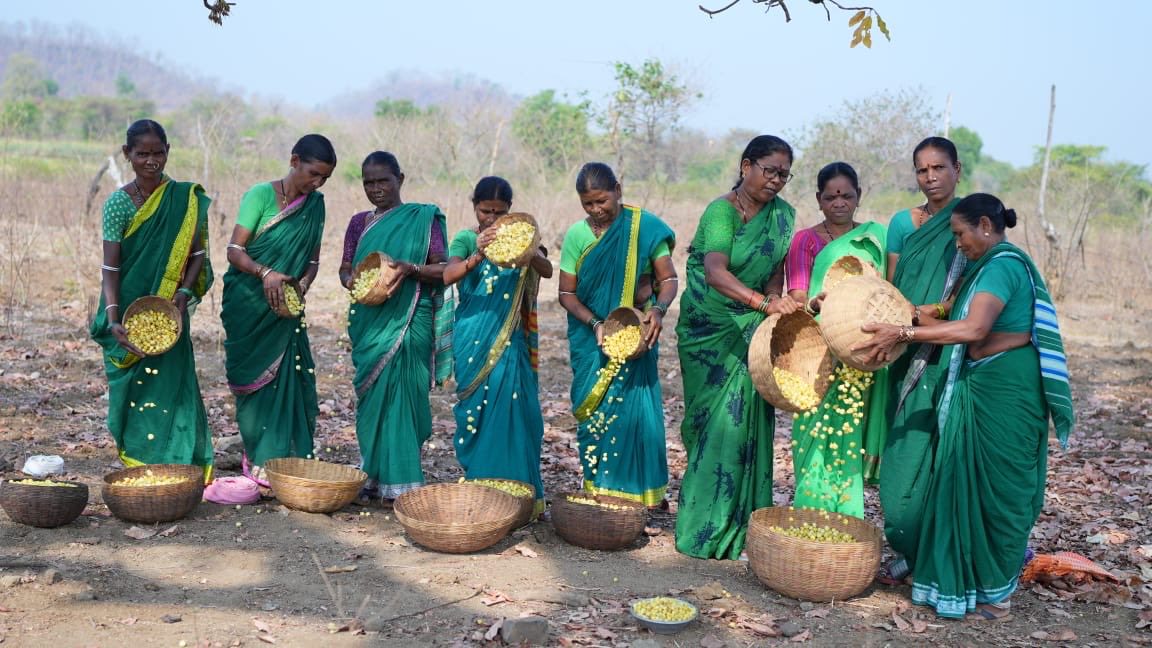
In the heart of Telangana’s tribal belt, a group of determined Adivasi women from Utnoor in Kumuram Bheem–Asifabad district have turned traditional knowledge into a ₹1.27 crore success story. The Bheem Bhai Tribal Women’s Cooperative Society is an inspiring example of tribal entrepreneurship, women empowerment, and sustainable livelihoods powered by cooperation.
With the guidance of the Integrated Tribal Development Agency (ITDA) Utnoor and TRICOR, this all-women cooperative transformed a forest flower into a profitable product line that supports over 100 tribal families. Their innovation — the nutritious Ipappuvvu laddu — has become a symbol of how cooperative enterprise can change lives in India’s tribal regions.
From Tradition to Enterprise
The journey of the Bheem Bhai Tribal Women’s Cooperative began with a simple idea: to turn the naturally growing Ipappuvvu flower, found abundantly in local forests, into a high-nutrition product. Combining the flower with peanuts, sesame, jaggery, cashew, raisins, and sunflower oil — as per NIN standards — the women began producing Ipappuvvu laddus.
This unique product is now in steady demand, proving that traditional tribal wisdom can be successfully merged with modern enterprise models.
Key Achievements & Milestones
- 12 women trained in Yavatmal, Maharashtra in food processing and quality standards.
- A ₹40 lakh production unit established with 60% TRICOR subsidy support.
- Monthly production: 2,300 kg of laddus supplied to 77 tribal schools under the Girijana Poshan Mitra Scheme.
- Market price: ₹360 per kg, sold through stalls at Shilparamam and Balapur.
- Turnover: ₹1.27 crore, achieved through institutional and retail sales.
- 100+ tribal families benefit directly from Ipappuvvu flower collection, processing, and income generation.
- The initiative received national recognition when Prime Minister Narendra Modi mentioned it in his “Mann Ki Baat” address.
Empowering Tribal Women and Families
This cooperative has brought remarkable social and economic change to Utnoor’s tribal community. Women who once relied solely on seasonal forest produce are now entrepreneurs, managing procurement, production, packaging, and marketing.
The project has created stable employment for women, improved household incomes, and fostered financial literacy. Moreover, men and youth in the community now participate in flower collection and transport, ensuring the benefits spread widely.
The initiative also promotes nutritional awareness among tribal children through the school supply scheme — turning a local product into a public health solution.
Institutional Support Driving Success
The success of the Bheem Bhai Cooperative is rooted in strong institutional backing of ITDA Utnoor which provided training, technical support, and monitoring and TRICOR that enabled access to capital through subsidies.
A Replicable Model for Tribal India
The Bheem Bhai model offers valuable lessons for other tribal regions:
- Tap into forest-based value chains with sustainable harvesting.
- Promote women-led cooperatives for inclusive growth.
- Ensure training, quality certification, and institutional buyers for steady demand.
- Use government schemes to build capital and capacity.
This initiative has shown how forest produce can fuel rural prosperity, turning natural resources into enduring sources of livelihood and dignity.
From forest flower to profitable enterprise, these women have redefined what sustainable development looks like on the ground.
Their story — recognized even by the Prime Minister in his Mann Ki Baat program — embodies the spirit of “Sahakar se Samriddhi” and sets a benchmark for women-led tribal entrepreneurship in India.
