



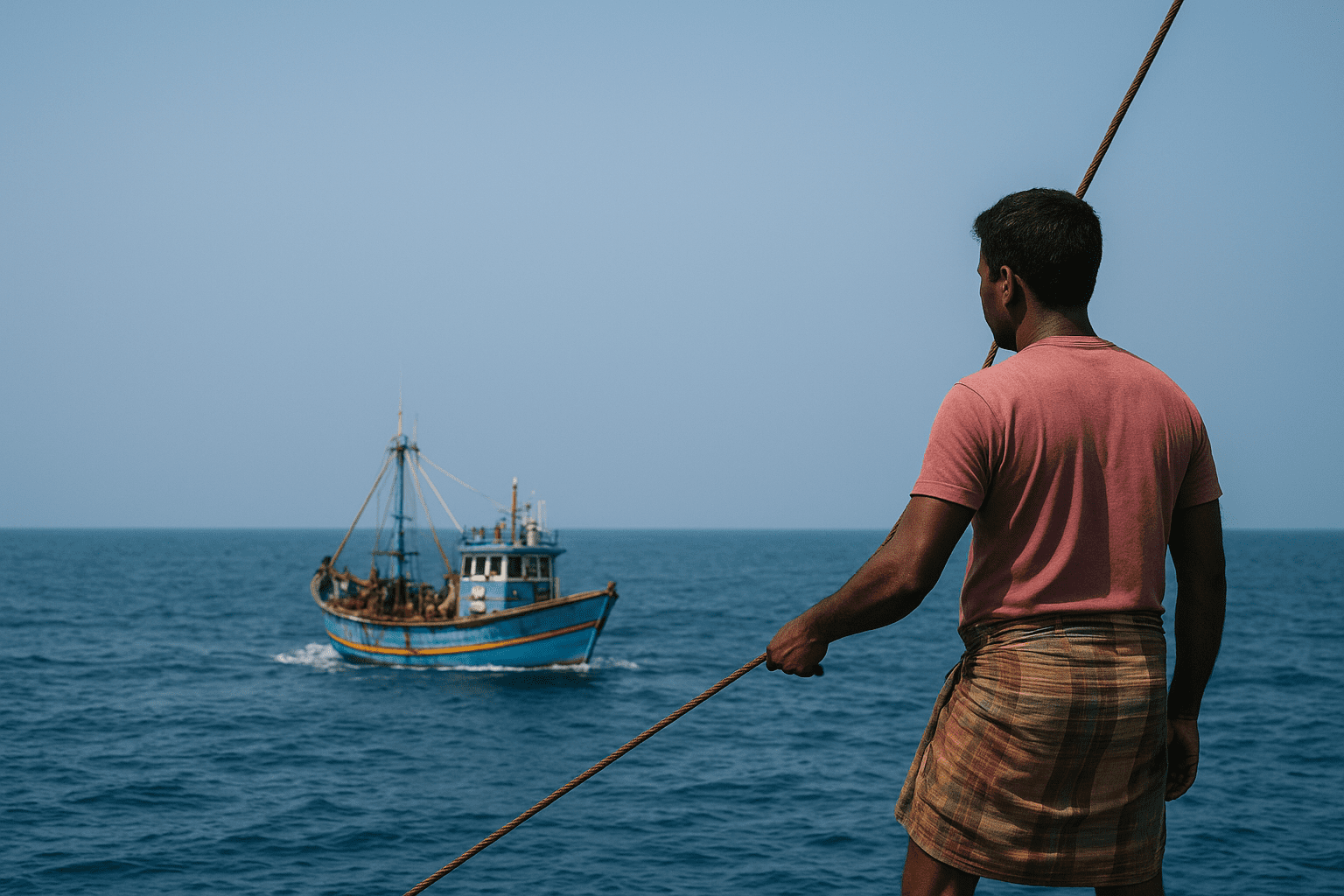
The Government of India notified on Saturday new Rules for Sustainable Harnessing of Fisheries in the Exclusive Economic Zone (EEZ), marking a major policy shift toward sustainable marine resource management and cooperative-led growth.
These rules align with the vision of a prosperous and inclusive Blue Economy, with a particular focus on empowering small-scale fisheries, Fishermen Cooperatives and Fish Farmer Producer Organizations (FFPOs).
Boosting Cooperative and Community-Led Deep-Sea Fishing
Under the new framework, priority access is granted to fishermen cooperatives and FFPOs for deep-sea fishing operations. This move aims to enhance productivity, value addition, and seafood exports through better traceability and certification systems.
A significant innovation is the introduction of the mother-and-child vessel model, designed to enable mid-sea transshipment while ensuring compliance with Reserve Bank of India (RBI) monitoring norms. This model is expected to particularly benefit the Andaman & Nicobar and Lakshadweep Islands, which together account for nearly 49% of India’s EEZ area, providing a boost to high-value fish exports such as tuna.
Institutional Support and Credit Access
To make the new framework effective, the government will extend support for training, international exposure visits, and capacity-building initiatives across the fisheries value chain—from processing and marketing to branding and export.
Financial support will be available under flagship programs such as the Pradhan Mantri Matsya Sampada Yojana (PMMSY) and the Fisheries and Aquaculture Infrastructure Development Fund (FIDF), ensuring affordable access to modern fishing vessels and equipment for cooperative entities.
Sustainable Practices and Marine Conservation
A key focus of the EEZ Rules is to ensure environmental sustainability. The government has banned destructive practices such as LED light fishing, pair trawling, and bull trawling. Minimum legal sizes for various fish species will be prescribed to conserve biodiversity, and Fisheries Management Plans will be developed with state governments and other stakeholders to restore declining stocks.
Additionally, the government will promote mariculture activities such as seaweed cultivation and sea-cage farming. These initiatives are expected to provide alternative livelihoods, reduce nearshore fishing pressure, and improve incomes for small-scale fishers.
Digital Governance: The ReALCRaft Portal
The newly integrated ReALCRaft portal will serve as the digital backbone for EEZ governance. Large and mechanized fishing vessels will now need a digital Access Pass, while traditional and small-scale fishers using non-motorized or small motorized crafts are exempt. The system enables real-time application tracking, paperless processing, and full transparency.
The ReALCRaft portal is being linked with the Marine Products Export Development Authority (MPEDA) and the Export Inspection Council (EIC) to facilitate Fish Catch and Health Certificates—key documentation for international seafood trade. The integration ensures end-to-end traceability, eco-labelling, and sanitary compliance, enhancing India’s seafood export competitiveness.
Security and Regulatory Reforms
In another major reform, fish resources caught in India’s EEZ beyond the contiguous zone will now be recognized as ‘Indian origin’, ensuring proper accounting under Indian customs and revenue frameworks. The rules also mandate the development of a National Plan of Action against Illegal, Unreported, and Unregulated (IUU) Fishing, reinforcing India’s commitment to global sustainability norms.
For sea safety, the government has made transponders and digital IDs (QR-coded Aadhaar or Fisher ID cards) mandatory on all vessels. The integration of the Nabhmitra navigation app with ReALCRaft will further enhance communication and safety, supporting enforcement agencies like the Indian Coast Guard and Navy in coastal security operations.
Strengthening India’s Blue Economy
India’s 11,099 km coastline and 23 lakh sq. km EEZ support over five million fishers across 13 maritime states and union territories. Despite this vast potential, the country’s deep-sea fishing has remained underdeveloped compared to neighboring nations such as Sri Lanka, Maldives, and Indonesia.
The new EEZ Rules are expected to unlock this potential by expanding India’s presence in global seafood markets, diversifying income for coastal communities, and ensuring sustainable exploitation of deep-sea resources.
This initiative positions India’s coastal communities as key stakeholders in the nation’s Blue Economy growth story while ensuring ecological balance and global trade competitiveness.
