



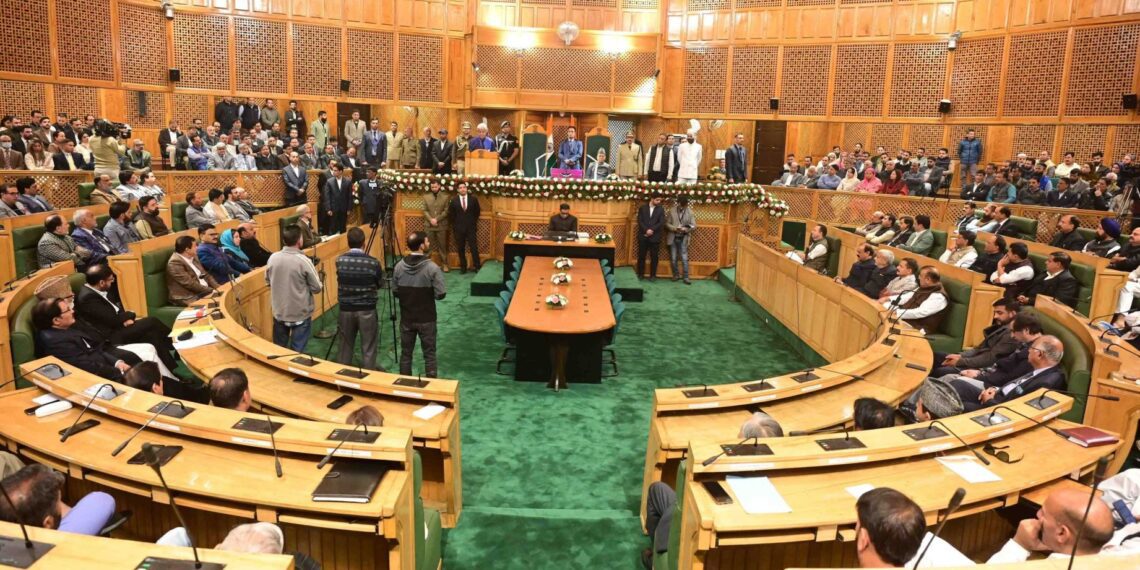
Jammu and Kashmir Legislative Assembly on Thursday passed four key bills, including the Jammu and Kashmir Cooperative Societies (Amendment) Bill, 2025, aimed at strengthening governance, accountability and revival of the cooperative movement in the Union Territory.
Introduced by Javid Ahmad Dar, Minister for Rural Development, Panchayati Raj, and Cooperatives, the Bill seeks to update the J&K Cooperative Societies Act, 1989, aligning it with the present-day challenges and administrative requirements of the sector.
During the debate, members across party lines underscored the need for greater transparency, oversight and institutional revival. MLA Narinder Singh called for a time-bound mechanism to address encroachments on cooperative properties, stressing that the Registrar should be empowered to initiate immediate action, followed by the Tribunal’s review.
MLA Satish Sharma highlighted irregularities in the electoral rolls of cooperative societies, pointing out that many records still include deceased members. He urged the government to cleanse and update voter lists while addressing illegal occupations of cooperative assets.
Expressing concern over the declining state of the movement, MLA Mubarak Gul noted that several cooperatives have become defunct and are unable to repay loans. He proposed the formation of a dedicated committee to revive dormant societies and ensure financial discipline.
Raising the issue of the Jammu Central Cooperative Bank (JCCB), MLA Nazir Ahmad Khan and MLA S.S. Salathia drew attention to unpaid employee salaries and unreleased depositor funds—estimated at around ₹200 crore. Salathia supported the Bill, stating that the proposed Cooperative Tribunal would help expedite disputes and restore public confidence.
MLA Tanvir Sadiq emphasized modernization and digital transformation of cooperative infrastructure to enhance accessibility and service delivery.
With these discussions, the Amendment Bill is expected to provide a framework for revitalizing the cooperative ecosystem in J&K, ensuring accountability, transparency, and renewed public trust. The House passed the Bill through a voice vote.
