



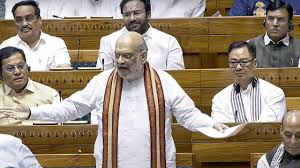
Union Cooperation Minister Amit Shah informed the Parliament on Tuesday that boards of multi-State cooperative societies will now have two reserved seats for women and one reserved seat for Scheduled Castes (SC) or Scheduled Tribes (ST).
The announcement came in response to questions from Congress leader Rahul Gandhi, who sought details on steps being taken to expand SC/ST participation in the cooperative sector.
In a written reply to the Lok Sabha, Shah added that the government has introduced similar provisions in the model bye-laws of Primary Agricultural Credit Societies (PACS), which have been shared with all States and Union Territories. The move, he said, is designed to make cooperative membership more inclusive and representative, giving women and marginalized communities a stronger role in decision-making.
Gandhi had also asked whether the government had granted exempted to mandatory allocations under the SC/ST Sub-Plan in major schemes of the Cooperation Ministry, particularly in financial assistance for setting up ethanol plants. He had also asked for details on initiatives of the government to increase SC and ST participation in forming cooperative societies.
Why The Issue is Important for Government
Cooperatives are often called the backbone of rural India, and these changes aim to ensure that marginalized communities and women get a stronger voice in decision-making. By mandating representation, the government is looking to bring diversity and equity into the leadership of India’s cooperative movement.
The Bigger Picture
With the MSCS (Amendment) Act, 2023 the Ministry of Cooperation is pushing for greater inclusion, representation, and modernization in India’s cooperative sector — ensuring that women, SCs, and STs have a seat at the table where decisions are made.
